⎈
Kubernetes Consulting
EKS, GKE and AKS clusters built with Terraform. Cloud-agnostic Helm charts, Karpenter autoscaling, Gateway API, IRSA, secrets-store CSI and deep networking troubleshooting.
Available for consulting & fractional DevOps
I'm Mayank Gandhe — a Kubernetes consultant and AWS engineer with 7+ years designing cloud platforms for fintech, banking and SaaS. I've been the founding DevOps engineer at startups, led migrations across AWS, GCP and Azure, and I build with AI agents every day.
 AWS SA Professional
 CKA
 Terraform Associate
years in cloud & DevOps
clouds migrated across (AWS · GCP · Azure)
AWS cost cut, no upfront spend
merged PRs in upstream open source (AWS-IA, Fluentd, j8a)
// how I can help
Whether you need a founding DevOps engineer to build from zero, a fractional DevOps lead to own the platform part-time, or a Kubernetes consultant to fix the thing nobody else could — here's what I do.
EKS, GKE and AKS clusters built with Terraform. Cloud-agnostic Helm charts, Karpenter autoscaling, Gateway API, IRSA, secrets-store CSI and deep networking troubleshooting.
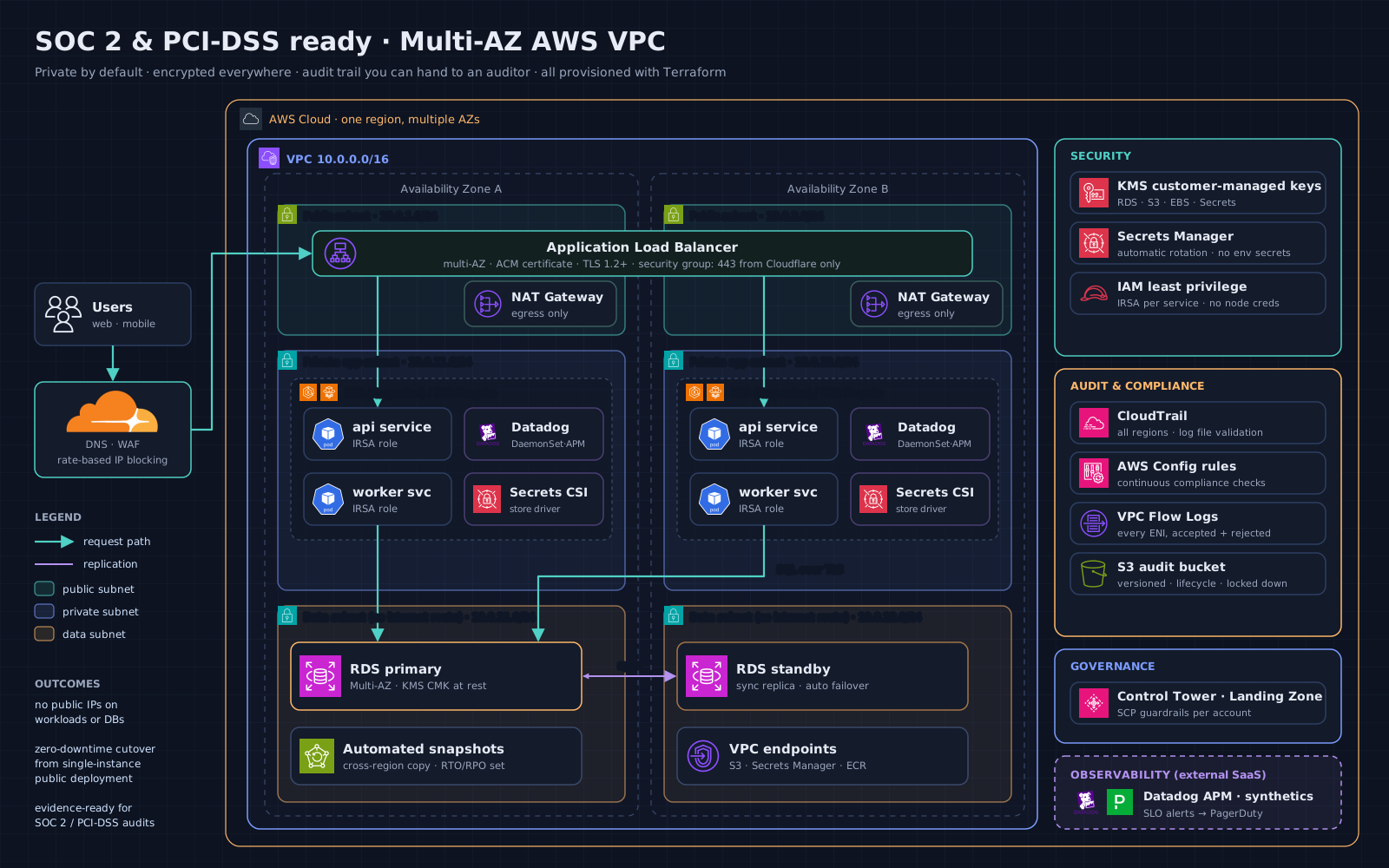
Multi-AZ, private-subnet VPCs, multi-account Landing Zones with Control Tower and SCPs, multi-cloud networking, and zero-downtime migrations from on-prem, Azure or GCP.
I've built startup platforms from an empty AWS account to production. You get infrastructure as code, CI/CD, runbooks and on-call practices your team can own after I step back.
SOC 2, PCI-DSS, CCPA and GDPR controls: KMS encryption, CloudTrail/Config audit trails, image scanning and hardening, Packer vulnerability pipelines, SAST and secret scanning in CI.
GitHub Actions, GitLab CI, Jenkins and CircleCI with reusable workflows, environment gates and safe rollbacks. Jenkins → GitLab migrations that cut licensing costs.
FinOps grounded in data: right-sizing, x86 → ARM, Savings Plans sized to real usage, Spot for batch, off-hours scheduling and per-namespace Kubernetes cost allocation.
OpenTelemetry, Datadog, Prometheus/Grafana, ELK and Splunk with correlation IDs across services. SLOs, error budgets, runbooks and blameless post-mortems.
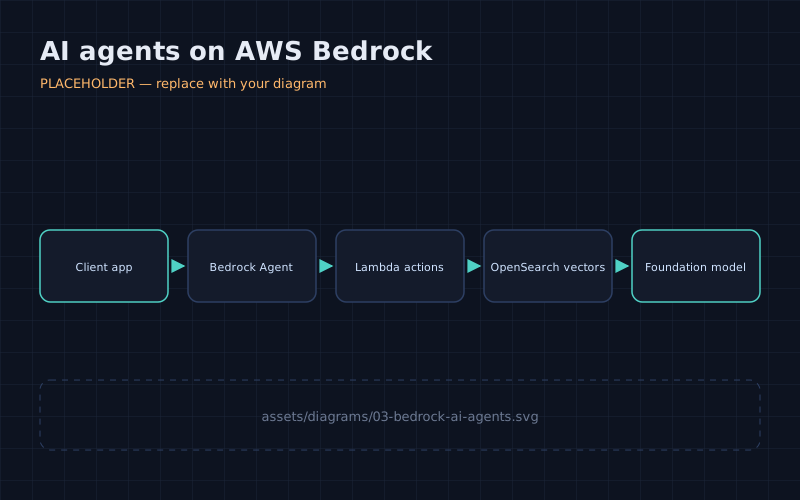
AWS Bedrock Agents, Knowledge Bases on OpenSearch vectors, Lambda action groups and Helm-packaged AI stacks. I also use AI coding agents to ship migrations faster.
// root cause or it didn't happen
Anyone can restart a pod. These are problems where the obvious fix was wrong and the real answer sat a few layers down. Filter by area, then open a story.
Intermittent DNS resolution failures across services, even though both CoreDNS pods were Running and Ready.
Checked pod placement: the scheduler had put both CoreDNS replicas on the same node. All cluster DNS traffic was hitting one node's network limits.
No anti-affinity rule on the CoreDNS deployment — high availability on paper, a single point of failure in practice.
Added podAntiAffinity so replicas always spread across nodes. Failures stopped and cannot recur from placement.
Every application read configuration from Consul. As workloads grew, Consul pods spiked CPU and crash-looped.
Traffic analysis showed all queries funnelling into a fixed number of Consul pods regardless of how many nodes ran applications.
Consul ran as a Deployment, so its capacity didn't scale with the workloads that depended on it.
Moved Consul to a DaemonSet: one agent per node, traffic stays local and capacity scales automatically with the cluster.
A custom logging SDK had two sinks. Under high load the Kinesis Firehose sink exhausted threads; the Logstash backup sink was fine.
Compared both sinks' transport: Kinesis used per-request HTTP calls, Logstash used a persistent stream with a dedicated connection.
Every log line triggered an HTTP request, consuming CPU and a thread each time — fine at low volume, catastrophic at peak.
Tuned the SDK's buffer settings to batch records before sending to Kinesis. Thread exhaustion disappeared under the same load.
Recurring OOM errors and timeouts in a Lambda processing financial data files.
Profiled memory across invocations and found it climbing with every warm start.
DB connections and socket objects were created per invocation and never reused or released.
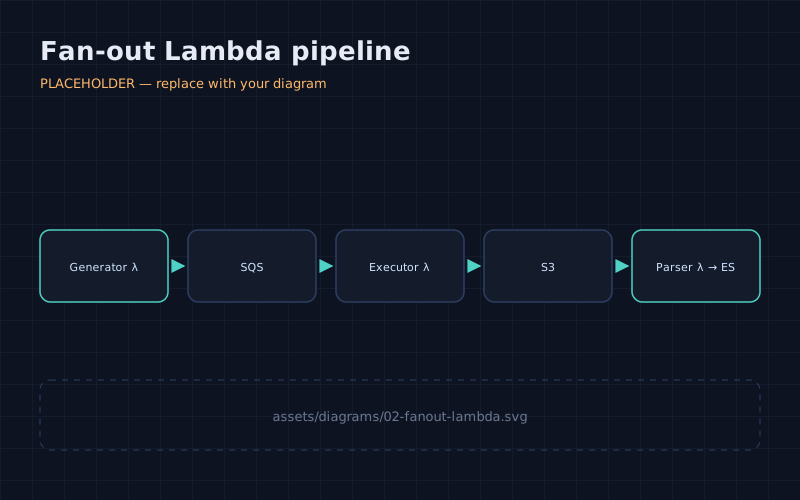
Moved clients outside the handler for reuse, then redesigned into a fan-out pipeline (SQS → executor → S3 → parser → Elasticsearch), with files over 500 MB offloaded to auto-scaling EC2.
Anomalous traffic spike on the load balancer metrics.
Traced request origins through Cloudflare monitoring and saw the attack shifting regions to evade geo-blocks.
A distributed brute-force attempt — location-based rules alone could never keep up.
Implemented rate-based IP blocking rules that neutralized the attack within minutes.
Application pods repeatedly killed for exceeding memory limits.
Correlated crashes with upload activity and inspected what the pod held in memory at the time.
Uncompressed images were being processed inside the pod, inflating memory usage on every upload.
Offloaded compression to Lambda, shrinking the pod's memory footprint and ending the instability.
Production ran on one instance in a public subnet — a single point of failure with direct internet exposure.
Mapped every dependency and traffic path so the cutover could happen live.
Infrastructure grew organically before anyone owned the architecture.
Rebuilt with Terraform as multi-AZ public / private / data subnets behind an ALB with NAT for egress, then cut over with zero downtime.
Credentials stored as plaintext environment variables across Elastic Beanstalk, Lambda and Kubernetes.
Inventoried every secret consumer and how each runtime loads configuration.
No central secret store, so each platform invented its own approach.
Moved everything to Secrets Manager — a pre-execution binary for Beanstalk and secrets-store-csi-driver for Kubernetes — so secrets never appear in config panels.
// blueprints
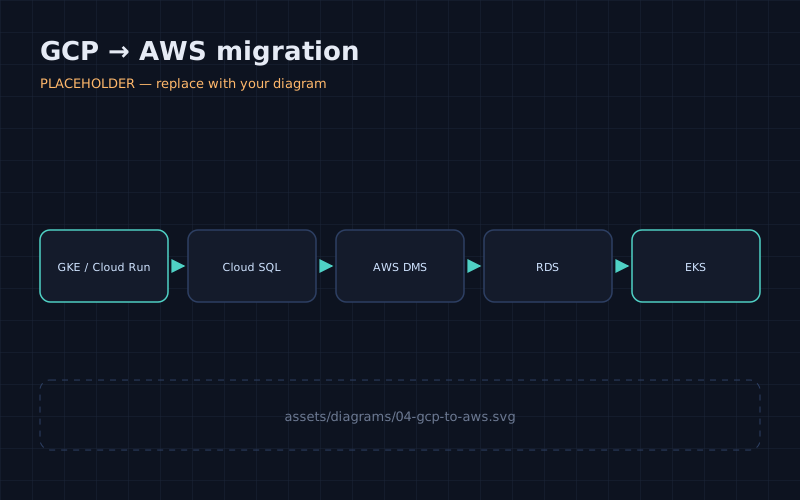
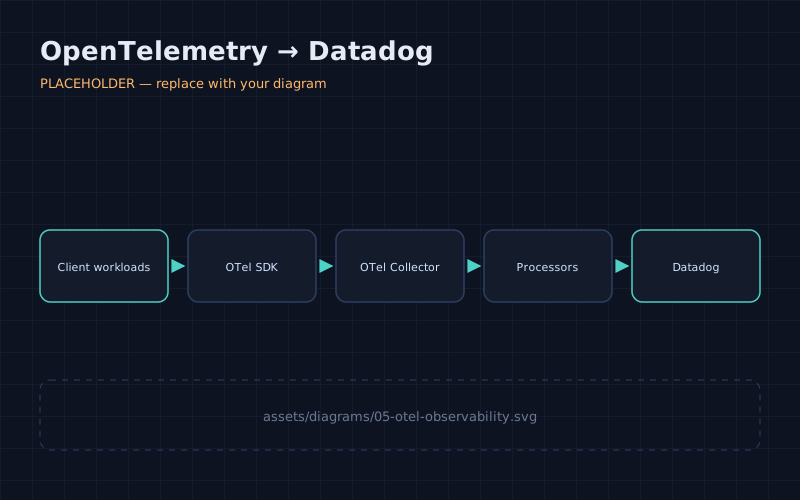
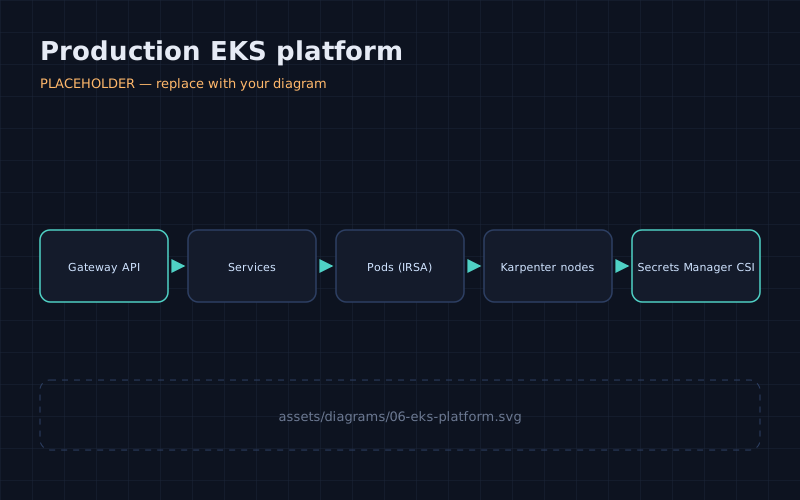
Systems I've designed and shipped. Click any diagram to enlarge.
// toolbox
Tools change every year. Networking, Linux, IAM, distributed systems and cost models don't — that's what lets me pick up any stack and debug it.
I treat AI agents as a force multiplier, not a replacement for understanding. In the GCP → AWS migration I used AI-assisted refactoring to port application code from GCP SDKs to AWS SDKs, then verified every change against the fundamentals. I build agent infrastructure for clients too — Bedrock Agents calling Lambda actions, grounded by RAG on OpenSearch.
// git log --author="Mayank Gandhe"
When a tool I depend on breaks, I fix it upstream instead of working around it. When the tool doesn't exist, I build it. Everything below is public on GitHub.
A complete AWS application platform in Terraform: one terraform apply goes from an empty account to a running, auto-scaling ECS service.
tfvars; since grown into a module that reads many services from YAMLAn in-cluster API that upgrades a Helm release on request, so applications and pipelines can roll out changes without anyone running helm by hand.
POST /upgrade with a release name, chart URL and values URLA drop-in debug container for Kubernetes. Run it next to a broken workload and see exactly what the pod sees, without rebuilding the app.
.env values and filtered subsets/timeout/:ms)Official AWS Integration & Automation Terraform module for Amazon OpenSearch Serverless.
merged#12 Fix duplicate principals in access policySep 2025Found while wiring this module to the Bedrock agent module for an AI-agent stack: the generated policy repeated the same principal and AWS rejected it. Fixed with distinct().
The official Fluentd DaemonSet and Docker images for Kubernetes log shipping.
merged#1312 Container log path configurable via envOct 2021The container log path was hard-coded, which broke clusters with non-default runtimes. Made it configurable through an environment variable while keeping Fluentd's path syntax.
A TLS 1.3 reverse proxy in Go for fronting microservice JSON APIs.
merged#257 Merge secrets into YAML config (~1.2k lines)Jun 2022 merged#361 Logging fixDec 2023Built the feature that lets private keys and certificates come from an external secret store instead of a static config file.
A Lambda that inventories every resource in every region of an AWS account with Resource Explorer v2 and exports it as a CSV to S3. Deployed with CloudFormation.
Infrastructure as code for a three-tier network on multiple cloud providers. Edit one tfvars file and the VPC baseline is done.
A batteries-included Helm chart with the resources a typical service needs, so new applications launch faster.
// verified
AWS Certified Solutions Architect – ProfessionalAmazon Web Services
Certified Kubernetes Administrator (CKA)CNCF · The Linux Foundation
HashiCorp Certified: Terraform AssociateHashiCorp
// writing
Long-form case studies on Kubernetes, multi-cloud platforms and AI infrastructure, written from real engagements.
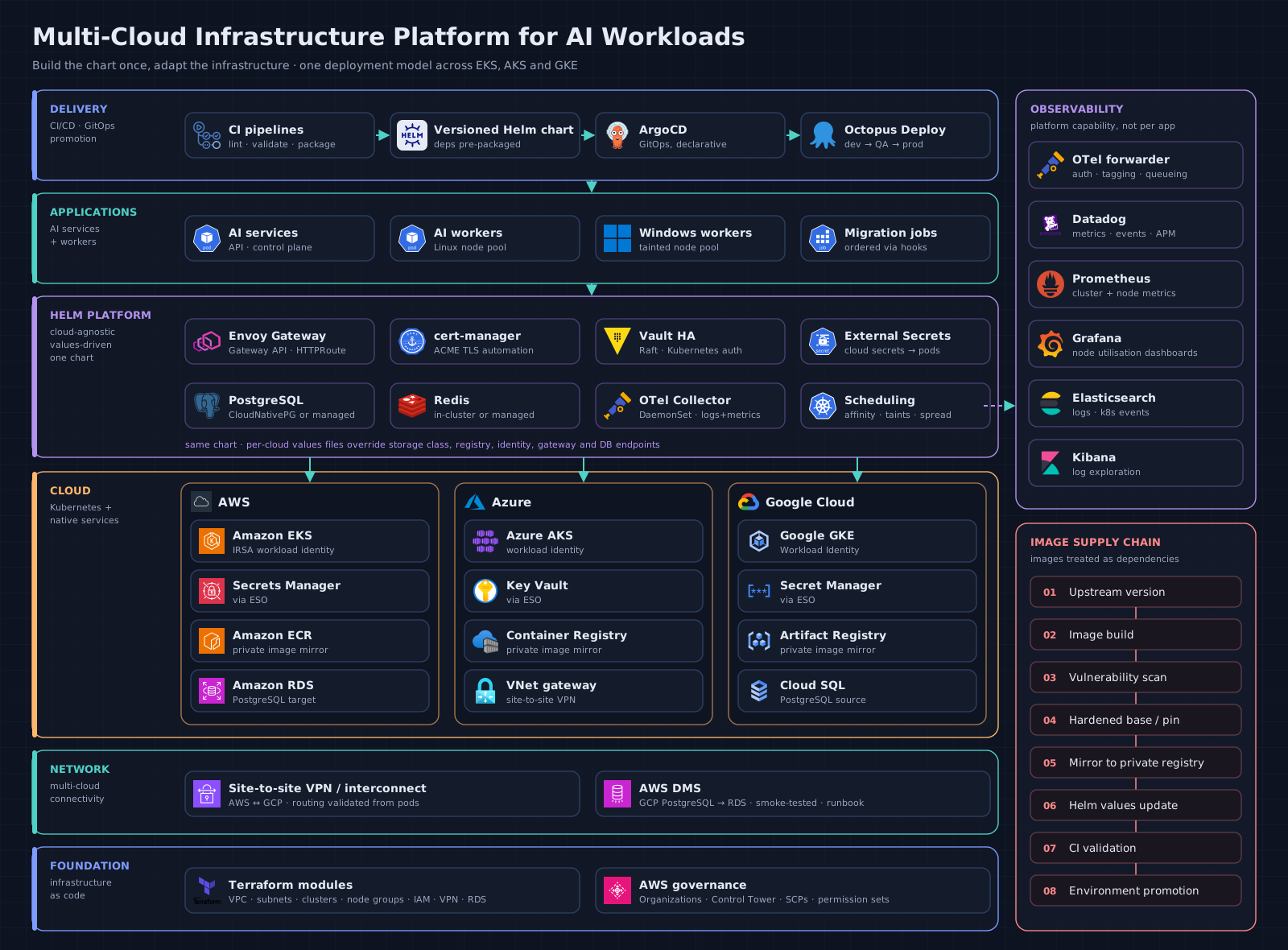
How one cloud-agnostic Helm platform runs an AI workload across EKS, AKS and GKE: Vault and External Secrets, OpenTelemetry to Datadog, Gateway API with cert-manager, air-gapped image supply chains, ArgoCD and Octopus delivery, and AWS DMS cross-cloud migration.
Read the case study →// questions I get asked
A fractional DevOps engineer works part-time or on a retainer to own your cloud infrastructure, CI/CD, Kubernetes and security posture without the cost of a full-time hire. I set up the platform, document it, and leave your team with infrastructure as code and runbooks they can operate.
Yes. I've been the founding DevOps engineer at multiple startups, building Terraform-managed AWS environments from zero: multi-AZ VPCs with private subnets, EKS or ECS Fargate, CI/CD, secrets management, observability and SOC 2 / PCI-ready controls.
By measuring before cutting: right-sizing instances, pods and RDS from real utilization, moving workloads from x86 to ARM (Graviton), right-sizing Savings Plans, using Spot for batch, and scheduling non-production and Karpenter nodes off outside business hours. On one fintech platform this delivered roughly 20% savings with no upfront payment.
Yes. I'm a Certified Kubernetes Administrator who has run EKS, GKE and AKS in production, written cloud-agnostic Helm charts, migrated Ingress to the Gateway API, and debugged issues like CoreDNS replicas saturating one node's network and Consul overload fixed by moving to a DaemonSet.
Yes. I've built AWS infrastructure for AI agents using Amazon Bedrock as the model layer, Bedrock Agents with Lambda action groups, OpenSearch as the vector knowledge base for RAG, and Helm charts to deploy the AI stack into client environments.
I have merged pull requests in aws-ia/terraform-aws-opensearch-serverless (fixing duplicate principals in access policies), fluent/fluentd-kubernetes-daemonset (configurable container log path) and simonmittag/j8a (merging secrets into YAML config, plus a logging fix). I also maintain my own tools such as helm-autoUpgrade, kDebugger, pull-aws-inventory and ECS-Terraform-FullSetup.
SOC 2, PCI-DSS, CCPA and GDPR — including KMS CMK encryption at rest and TLS in transit, CloudTrail and AWS Config audit pipelines, SCPs, Landing Zone and Control Tower, Packer-based vulnerability management and container image hardening.
// kubectl apply -f collaboration.yaml
Founding DevOps, fractional DevOps lead, Kubernetes consulting or a cost-optimization sprint — tell me what's breaking and I'll tell you how I'd dig in.
Based in Indore, India · Working remotely with teams in Australia, the US and worldwide